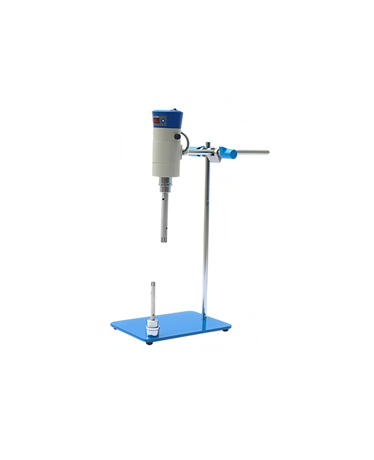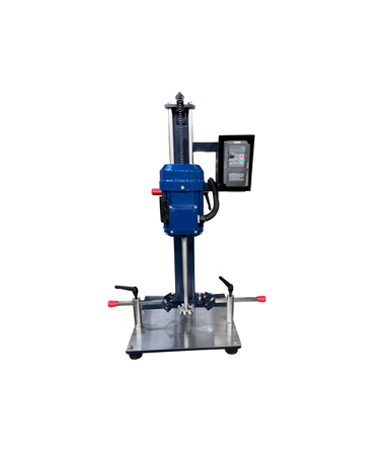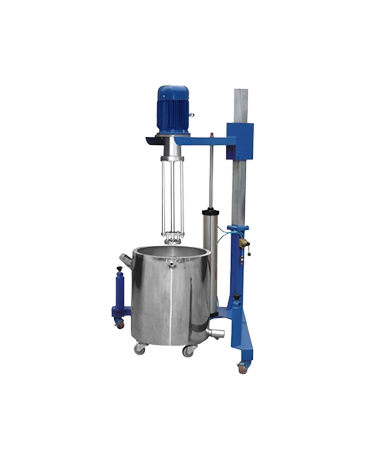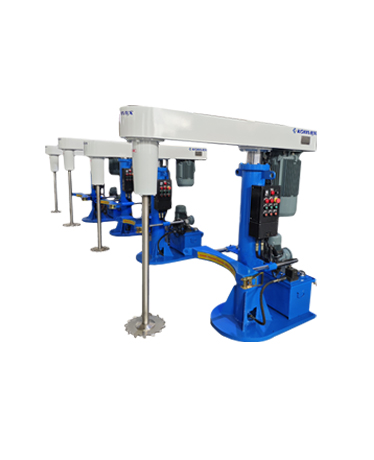


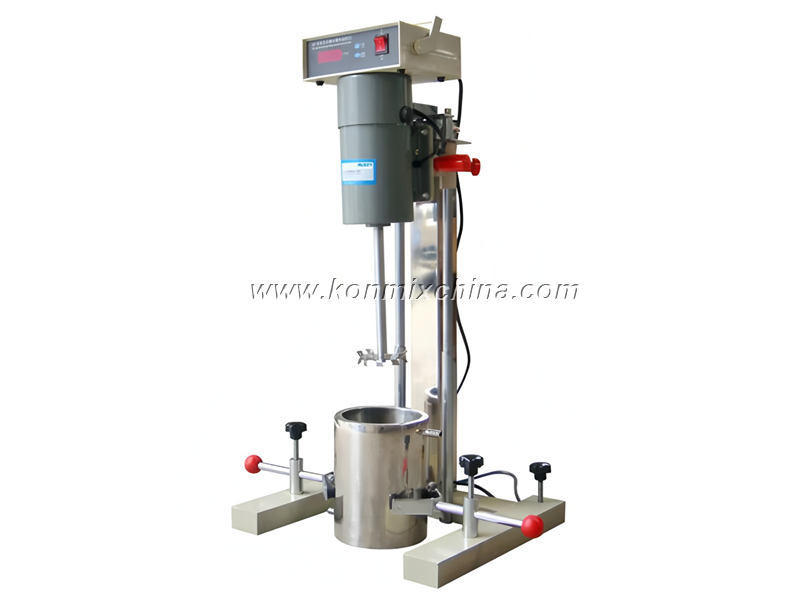
Category: Lab Disperser
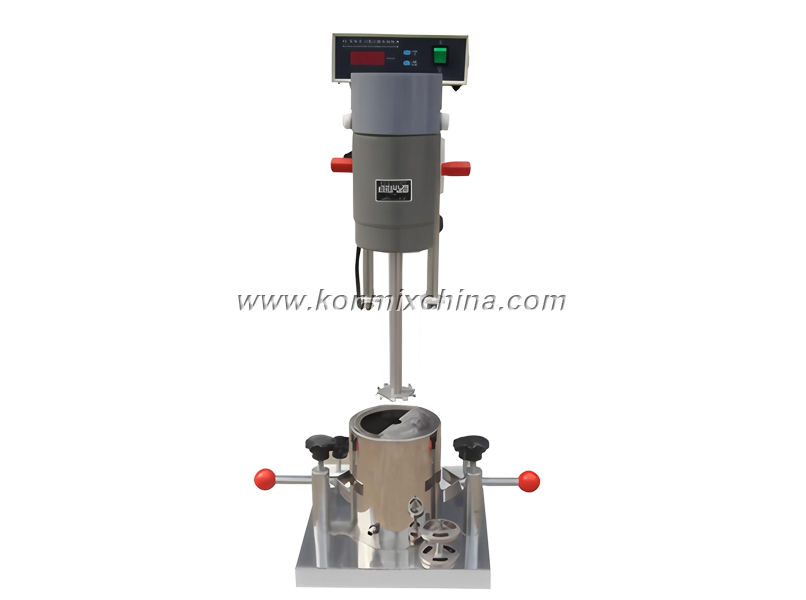
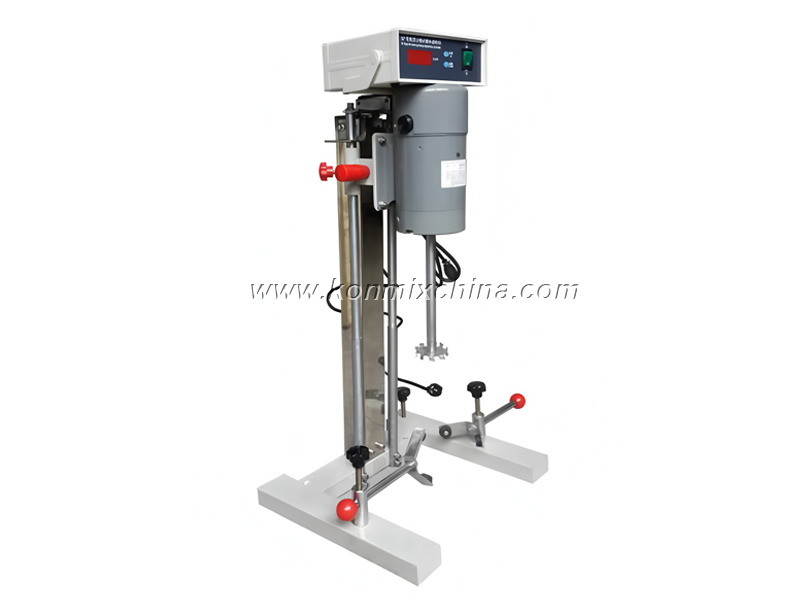
Model:KFS-400W
Feature: Adjustable speed, digital display function, easy operation. Often used in factories, universities, and colleges for small-batch experiments.
The KFS-400W High-speed Disperser is also called " Lab High-speed Dissolver ".
It is an experimental equipment designed for small-batch dissolution and dispersion, mixing and stirring of products with different viscosities. Through the high-speed rotation of the dispersing disc (up to 8000 rpm), it achieves very high linear speed, enabling rapid dispersion, dissolution, uniform mixing, and emulsification of materials.
• This model has very high peripheral tip speed of the toothed disc which reaches 8000rpm.
• The strong shearing, crashing and friction forces generated between the materials.
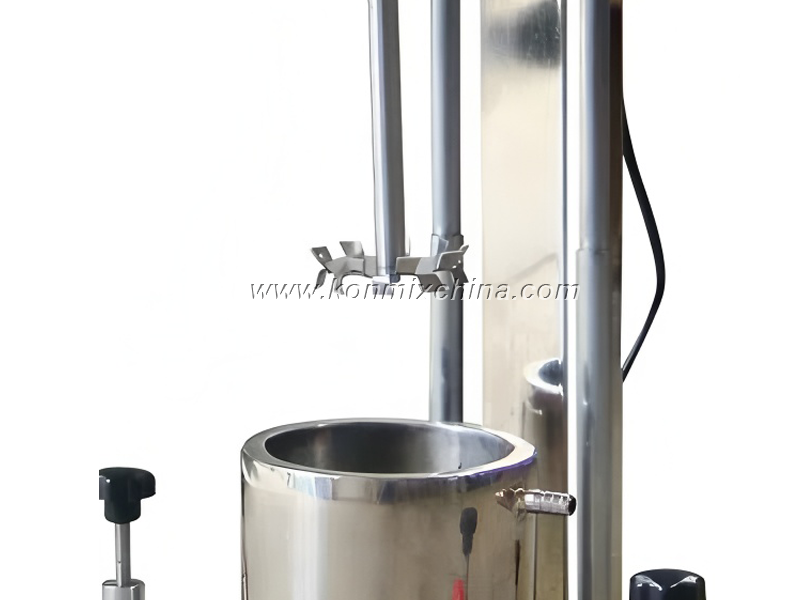
• Toothed disc disperse, dissolve and mix the materials efficiently.
• The large stress forces break down the agglomerates, and achieve symmetrical particles.
• All the contacting parts are made of SS304 or 316L stainless-steel.
Through the high-speed rotation dispersing disc, the materials will become in annular form flow, resulting in strong vortex flow, which descend down to the bottom of the vortex in spiral state. During the process, materials are dispersed, dissolved, mixed and emulsified efficiently due to the strong shearing crash and friction among the particles.
Through the manual rotation device to drive the dispersing disc up and down to meet the production requirements.
1. Motor: high quality precised motor.
2. Power: 400W,500W, 750W for selection.
3. Power Supply: 220~240V, 50Hz, or customized 110Volt.
4. Speed Control: various speed controlling.
5. Speed: 0-8000RPM.
6. Capacity: 0.3~1.5L.
7. The contacting part materials is: SUS304 stainless-steel.
8. Other parts: Q235-A.
9. Height Adjustment: manual adjustment.
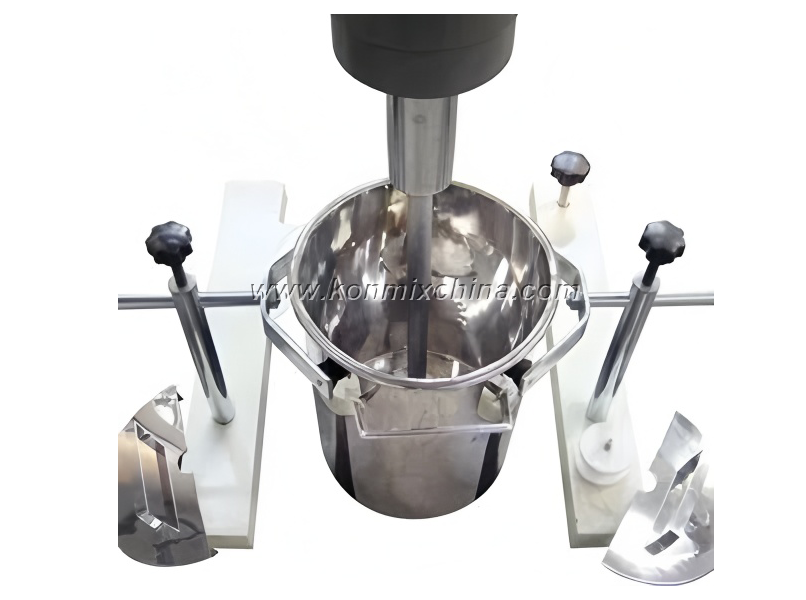
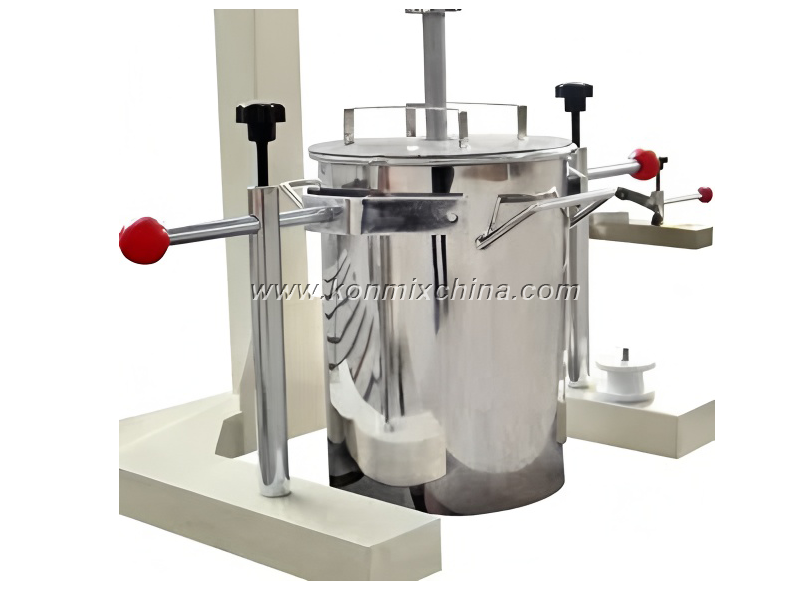
10. With dispersing blade Φ50mm, Φ60mm, one 1.5Liters tank.
11. Package: by standard exporting wooden or carton box.
Material viscosity: <=10,000 cps.
Production Capacity: 0~5Liter, mainly for laboratory trials.
Applied materials: this model is suitable for the dispersion, mixing of laboratory small trials, and often applied in the industries of coatings, paint, inks, petrochemical, pharmaceutical, food and fine chemical industries. It is widely used in the industrial production of scientific research, new product development and small batch products.